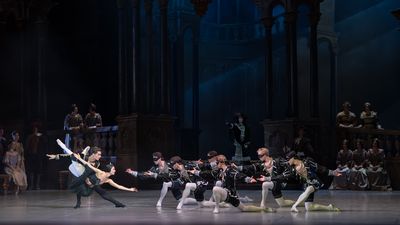
To mark the centenary of its world premiere, Béres Attila stages Zoltán Kodály’s Háry János at the Hungarian State Opera. The production, starring Csaba Sándor and Gabriella Balga, is conducted by Péter Halász, while the spoken roles are performed by András Csonka and András Rusznák. The anniversary performance is presented seven times between 17 and 25 October 2026, while the dress rehearsal on 16 October is open to secondary school students as part of MVM OperAdventure.
Is János Háry lying when he tells of how he rescued the Austrian Emperor’s daughter, Marie Louise, defeated Napoleon’s army single-handedly, and then turned down all the riches of the Viennese court, before finally returning home to Nagyabony with Örzse? For Kodály, the answer was clear: Háry is not merely an ordinary teller of tall tales, but a poet whose stories preserve not the truth of historical fact, but the truth of the imagination.
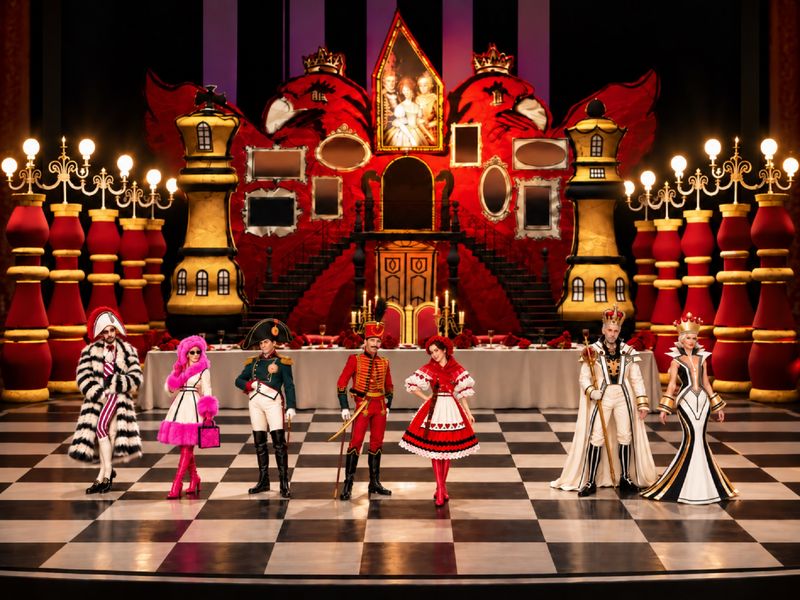
This idea lies at the heart of the new production by Attila Béres. In his interpretation, the question is not whether Háry’s stories are true or not: for him, poetry enables an ordinary person to survive and shows how they can preserve their dignity in a world over which they have little influence. Through the creative power of storytelling, it becomes possible to reinterpret the past, endure the present and imagine the future. The director of the Miskolc National Theatre, who previously staged the story of the veteran soldier at the Szeged Open-Air Festival, makes his directing debut at the Hungarian State Opera with Kodály’s work, following an entirely new concept and working with a new creative team. In Hanna Erős’s sets and Ildi Tihanyi’s costumes, fairytale elements and military motifs are combined around the theme of chess, filling Háry’s imagination with colourful figures and forms. The visually spectacular production also features projections by Zsombor Czeglédi and choreography by Dénes Kovács.
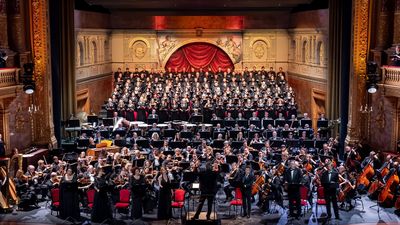
The title role is performed by Csaba Sándor while Gabriella Balga plays Örzse. Zsófia Kálnay appears as Marie Louise, Szilvia Rálik as the Empress, Attila Erdős as Baron Ebelasztin, János Szemenyei as Napoleon, and András Kiss as Uncle Marci. Among those making their debut on the Opera House stage in the spoken roles are András Csonka (Emperor Francis / Peasant), András Rusznák (Muscovite sentry / Student), and Artur Szőcs (Judge / General Crucifix). The Hungarian State Opera Orchestra, Chorus, and Children’s Chorus are conducted by Péter Halász. The Opera’s Principal Guest Conductor and former General Music Director is to present Kodály’s extraordinarily rich score in a more complete form than previously, inclding a composition added to the work later, also known as the Theatre Overture.
Following its premiere on 17 October 2026, the Hungarian State Opera will perform Kodály’s Háry János a further six times: on 18, 20, 21, 22, 24, and 25 October.
As part of the Háry100 anniversary programme, the Opera House presents a matinée of Kodály folk-song arrangements on the day after the premiere. Beginning at 11:00 am on 18 October, Andrea Brassói-Jőrös, Erika Gál, István Kovácsházi, Csaba Sándor, and István Rácz will perform a selection of the composer’s folk-song arrangements accompanied on the piano by Kálmán Szennai.
With the world premiere of Háry János on 16 October 1926, one of Zoltán Kodály’s most important artistic ambitions was realised: authentic Hungarian folk song and classical music could take the stage of the country’s foremost opera house as equal partners. Over the past century, the Opera House has presented the work more than 500 times, and it was also chosen to honour Kodály on the occasions of his 65th, 70th, 75th, and 80th birthdays.
Háry János has since grown beyond the Opera’s stage: amateur and professional productions have been mounted throughout Hungary, and an animated film was also made based on the work. Meanwhile, its best-known melodies, including the Recruiting Song and “Beyond the Tisza, beyond the Danube…”, have become part of the musical consciousness from school age onwards. The Háry János Suite, assembled from themes from the work and including the famous Intermezzo, has also brought Kodály’s name and his ideas about the relationship between folk and art music to audiences around the world, becoming one of his most frequently performed orchestral compositions.